Crunchyroll vs Netflix for Anime: Which Is Better in 2026?
Trying to settle the Crunchyroll vs Netflix anime debate? For anime itself, Crunchyroll wins in 2026 — it has the largest legal anime catalogue, weekly simulcasts about an hour after Japan. Netflix wins if you already subscribe, prefer complete seasons you can binge, or want big-budget originals with dubs in many languages. This comparison breaks the decision down by catalogue, release style, dubs, quality, apps and price model, then gives a clear verdict for each type of viewer.
Quick verdict: Anime-first viewer → Crunchyroll. Already paying for Netflix and only casually into anime → Netflix is probably enough. Serious fan with budget for both → Crunchyroll for weekly simulcasts, Netflix for originals. Broke → neither service is free anymore (Crunchyroll’s free tier ended on December 31, 2025) — try genuinely free legal options like Tubi, Pluto TV-style channels or official YouTube channels instead.
Table of Contents
- Catalogue: Depth vs Curation
- Simulcasts and Release Style: Weekly vs Binge
- Subtitles, Dubs and Quality
- Apps, Devices and Offline Viewing
- Price and Free Options
- Crunchyroll vs Netflix Anime: Full Head-to-Head Table
- Discovery: Who Surfaces Your Next Favourite?
- Beyond Streaming: Manga, Music and Everything Else
- Switching and Rotating: The Strategy Most Fans Actually Use
- Regional Differences: Why Your Answer May Differ
- The Decision Checklist
- Common Mistakes in This Decision
- Which Should You Pick?
- Frequently Asked Questions
Catalogue: Depth vs Curation
Crunchyroll wins on raw size. As a dedicated anime platform, its library runs into the thousands of series and films, including deep back catalogues, long-running shonen with hundreds of episodes, and niche titles most general platforms never touch. For fans exploring anime beyond the hits, that depth matters: you can jump from a seasonal premiere into the ten-year-old series it references, all in one app.
Netflix wins on curation and originals. Its anime section is far smaller, but it is deliberately stocked: critically acclaimed films, high-profile originals it funded itself, and a rotating set of licensed series. Netflix originals sometimes reach production budgets and global marketing that smaller anime platforms cannot match.
Winner: Crunchyroll — for catalogue size, depth and completeness it is not close. Netflix’s curation is a quality filter, not a library.
The practical test: write down the five shows you most want to watch, then search both services. Whichever one has more of your actual list is the right choice for you — abstract catalogue size means little if your favourite series is missing.
Simulcasts and Release Style: Weekly vs Binge
This is the biggest structural difference between the two services.
Crunchyroll follows the Japanese broadcast rhythm. New episodes of simulcast series arrive about an hour after they air in Japan, and you watch one episode per week as the season unfolds. That weekly rhythm is the natural way anime is released, and it lets you follow along with the global conversation — episode discussions, fan theories, spoiler-managed social feeds — as it happens.
Netflix usually releases anime in batches. Most of its series drop as complete seasons, so you can binge the whole thing in a weekend. That is fantastic if you hate waiting and loathe spoilers — you simply start watching after everything is out. The trade-off is that you experience the show months after Japanese viewers did, and there is no weekly community discussion to join.
Neither model is objectively better. Weekly viewers and spoiler-dodgers tend to prefer Crunchyroll’s rhythm; binge-watchers who want everything now tend to prefer Netflix’s. See our guide to Crunchyroll’s plans for what simulcast access actually costs.
Winner: depends on you. Weekly follower → Crunchyroll. Weekend binger → Netflix.
Subtitles, Dubs and Quality
Subtitles: Both services offer high-quality English subtitles, along with multiple other languages. Crunchyroll has a slight edge in subtitle variety across its deep catalogue; Netflix’s subtitle presentation is polished but covers fewer niche titles.
Dubs: Netflix is arguably stronger here — as a global platform, it routinely produces dubs in many languages for its anime originals and major licenses. Crunchyroll dubs many headline simulcasts a few weeks behind the subtitled premiere, and its dub catalogue keeps growing, but Netflix’s dub pipeline is broader, particularly beyond English.
Video quality: Netflix’s streaming infrastructure is excellent, with consistent 4K where the source material supports it. Crunchyroll’s quality is very good on Premium, though it maxes out at lower resolutions on some plans and devices. In practice, both look great on a phone or laptop; on a large 4K TV, Netflix has the edge for the titles it carries.
Winner: Netflix, narrowly — on dub breadth and top-end video quality. Crunchyroll counters with subtitle coverage across far more titles.
Apps, Devices and Offline Viewing
Both services run on essentially everything: Android, iOS, smart TVs, consoles, streaming sticks and web browsers. Netflix’s apps are more refined and its recommendation engine is stronger, which helps you discover new anime beyond your searches. Crunchyroll’s app has improved steadily and adds anime-specific tools Netflix lacks — seasonal browsing, simulcast schedules and watchlist organisation built around weekly releases.
Offline downloads are available on both: Crunchyroll offers downloads on its Premium tiers, and Netflix includes downloads in its standard plans. If you commute or travel, both cover you — our guide to watching anime offline legally compares how downloads work across services in detail.
Winner: a draw. Netflix’s apps are more polished; Crunchyroll’s are more anime-aware.
Price and Free Options
Netflix has no free tier (beyond occasional promotions) — you pay from day one, though many people already pay for Netflix for non-anime content, which makes its anime section effectively free for them.
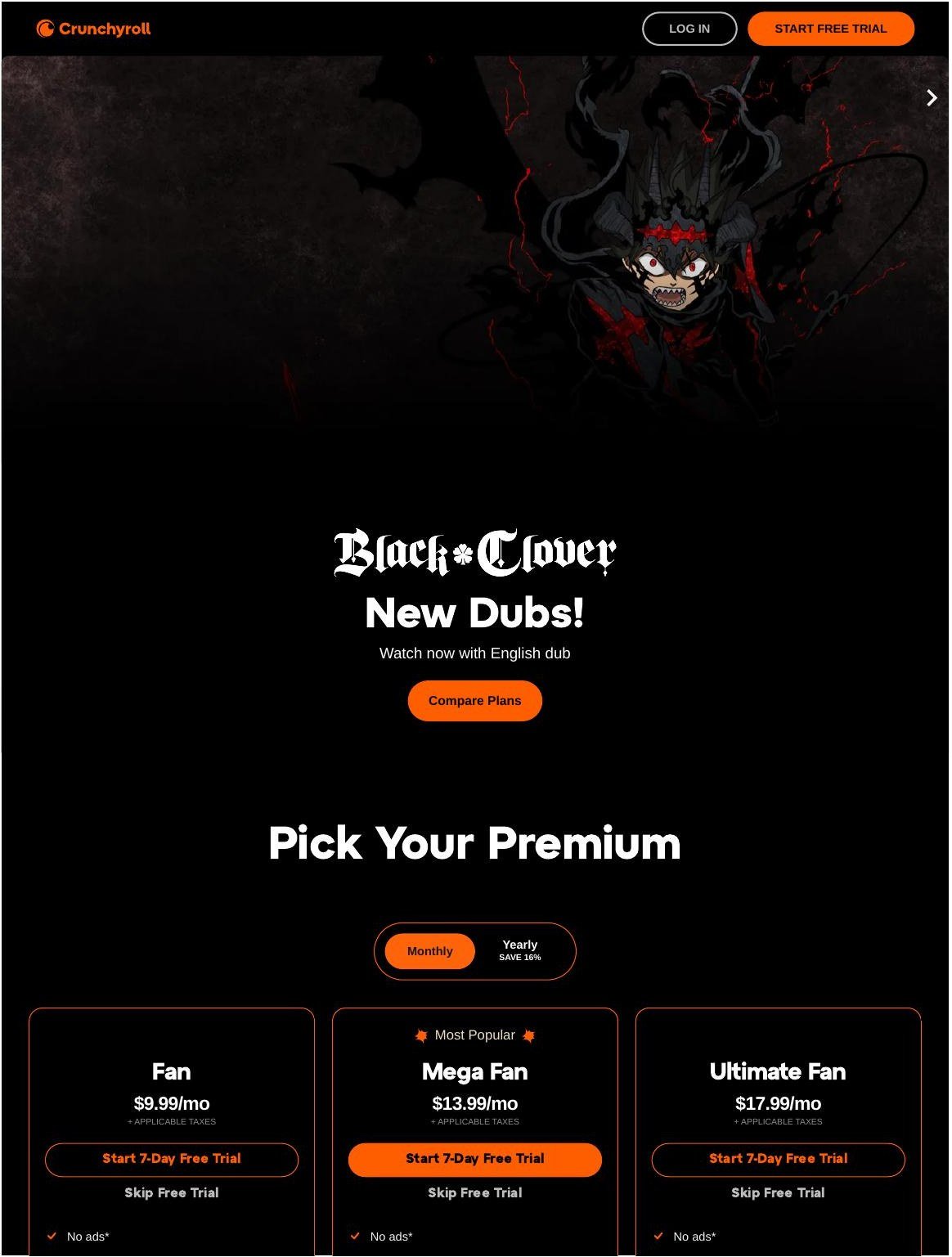
Crunchyroll used to offer a free, ad-supported tier, but it ended on December 31, 2025 — watching now requires a paid plan, starting from the entry Fan tier (a free trial is sometimes offered to new users). Its entry plan is still cheaper than Netflix, which matters for budget-conscious viewers and for anyone still deciding how serious their anime habit is.
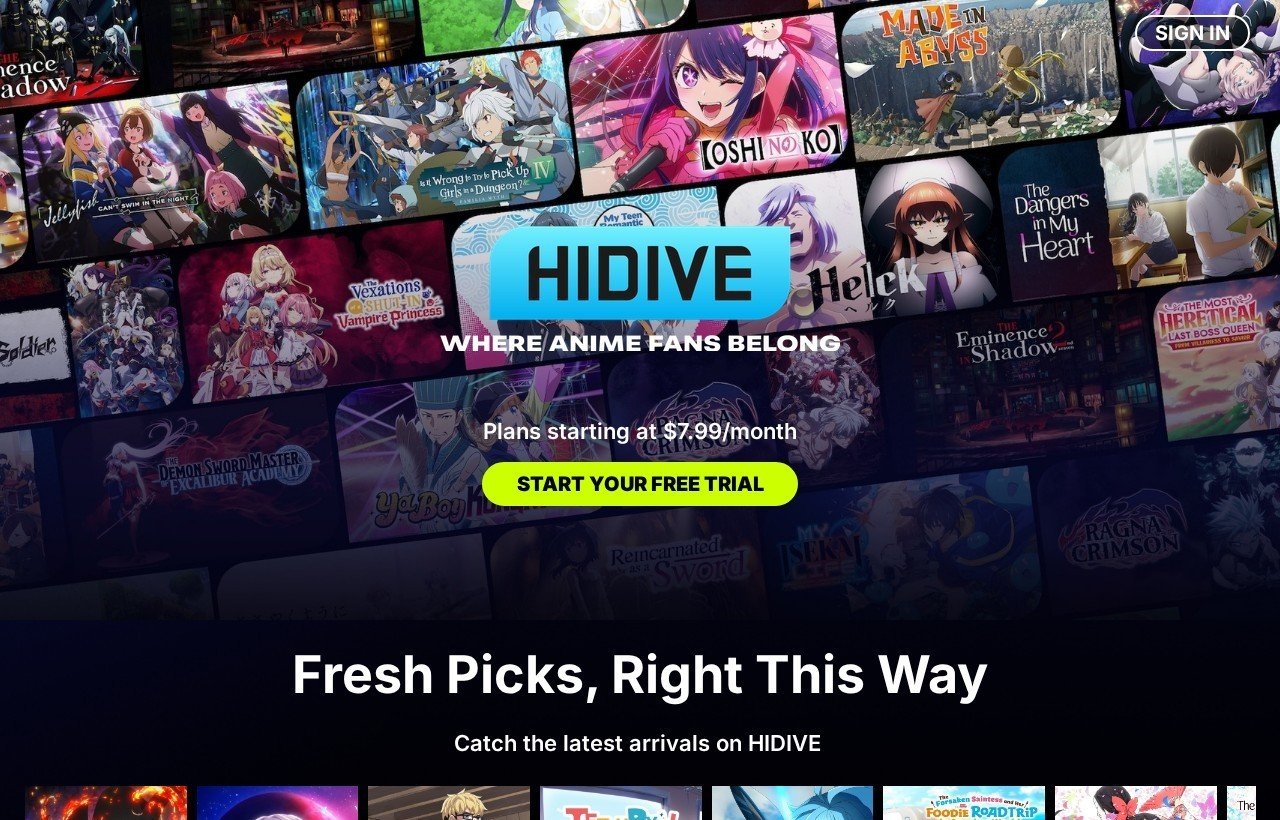
Exact prices vary by country and change over time, so check each service’s pricing page for your region rather than trusting a fixed figure. The structural comparison stays the same: Crunchyroll is a cheaper, single-purpose subscription; Netflix is a broader, pricier subscription whose anime is one section among many.
The fairest price comparison is the paid plan against the paid plan, but in real life most people compare “Netflix, which I already have” against “Crunchyroll Premium, which I would have to add.” If anime is your main reason to subscribe to anything, Crunchyroll Premium is the dedicated tool for the job and typically the cheaper one. If Netflix is already in your household budget, start there and see how far its anime section takes you.

Crunchyroll vs Netflix Anime: Full Head-to-Head Table
| Factor | Crunchyroll | Netflix |
|---|---|---|
| Catalogue size (anime) | Largest legal library | Smaller, curated |
| Back-catalogue depth | Very deep, incl. long-running series | Rotating, shallower |
| New episodes | Weekly simulcasts (~1h after Japan) | Usually full-season batches, months later |
| Simulcast count per season | Extensive | Limited |
| Originals | Some exclusives | Strong slate, big budgets |
| Subtitles | Many languages, deep coverage | Many languages, polished |
| Dubs | Many headline series, weeks behind subs | Broad multi-language dubs |
| Free tier | No — ended Dec 2025 | No |
| Offline downloads | Premium tiers | Standard plans |
| Best video quality | Very good | Excellent (4K widely) |
| Apps and devices | All major platforms | All major platforms |
| Discovery/recommendations | Anime-specific browsing | Strong general algorithm |
| Best for | Seasonal followers, explorers | Bingers, existing subscribers |
Discovery: Who Surfaces Your Next Favourite?
Catalogue size only matters if you can find things in it. Netflix’s recommendation engine is the stronger general-purpose tool — years of cross-genre viewing data mean its rows are personalised aggressively, and anime suggestions there surface titles you would never have searched for. The risk is sameness: the algorithm converges on the big names.
Crunchyroll’s discovery is anime-shaped instead: seasonal charts, simulcast schedules, genre and theme browsing, and curated collections. For a fan deliberately exploring — “what mecha aired this year?”, “which romance completed last season?” — that structure beats a general algorithm, because anime fandom browses by season and genre in a way film and TV audiences do not.
Winner: depends. Passive discovery → Netflix. Deliberate, season-by-season exploration → Crunchyroll.
Beyond Streaming: Manga, Music and Everything Else
Both services are more than an episode player, in opposite directions. Crunchyroll wraps its streaming in anime culture: a digital manga library on higher tiers, a store with member discounts, news and community features, and games tied to anime franchises. Netflix wraps anime in everything else: if your household watches films, stand-up and documentaries too, the same subscription covers all of it, and anime is simply one shelf in a huge store.
This changes the value equation. If anime is 90% of your viewing, Crunchyroll’s extras are the relevant ones. If anime is 20%, Netflix’s breadth wins the household argument even when Crunchyroll wins the anime argument.
Switching and Rotating: The Strategy Most Fans Actually Use
Few viewers pick one service forever. The common pattern among experienced fans is rotation: Crunchyroll during a heavy simulcast season, paused during a quiet one; Netflix binged in bursts whenever a major original drops; watchlists kept in both apps so nothing is lost between switches. Neither service locks you in — subscriptions are monthly, cancellations take effect at the end of the paid period, and your account history waits for you when you return.
Rotation works because anime consumption is seasonal by nature. The four-question checklist below tells you which service deserves this season’s money, and the honest answer is allowed to change four times a year.
Regional Differences: Why Your Answer May Differ
Everything above tilts by country. Crunchyroll’s catalogue is deepest in the Americas and parts of Europe and thinner elsewhere; Netflix’s anime shelf in Japan, for example, is far larger than its anime shelf in most Western markets, because domestic licensing works differently. Dub availability follows the same pattern — a series may be dubbed in Spanish and Portuguese on one service and subtitled-only on the other in your country.
This is why international friends can argue about this comparison and both be right. Before applying any verdict in this article, run the five-show test inside both apps in your region: that local result outranks every general comparison, including this one.
The Decision Checklist
Answer these four questions and the verdict is usually obvious:
- Do you watch anime weekly while it airs? Yes → Crunchyroll. No → question 2.
- Do you already pay for Netflix? Yes → start with Netflix; add Crunchyroll only if your watchlist runs dry. No → question 3.
- Would you rather binge complete seasons than wait weekly? Yes → Netflix. No → Crunchyroll.
- Is your budget zero? Neither service — Crunchyroll’s free tier ended in December 2025. Use genuinely free legal options like Tubi, Pluto TV-style channels, official YouTube channels or library apps instead.
Common Mistakes in This Decision
- Comparing raw catalogue numbers only. A giant library missing your five favourite shows loses to a small library that has all five. Search your personal watchlist on both before deciding.
- Paying for Netflix “for anime” when you already have it. If Netflix is in your household for other reasons, its anime costs you nothing extra — factor that in honestly.
- Assuming batch releases mean better. Netflix’s all-at-once drops are convenient, but for Netflix-licensed simulcast-style shows the wait can mean months of dodging spoilers.
- Ignoring the free trial. If Crunchyroll offers a free trial in your region, a week on it answers more questions about fit — app quality, subtitles, your region’s catalogue — than any comparison article, including this one.
- Committing annually on day one. Try monthly first on whichever you choose; switch to annual pricing only once the habit is proven.
Which Should You Pick?
- Pick Crunchyroll if you follow seasonal anime weekly, want the deepest catalogue, or are exploring anime seriously for the first time. It is the only service built entirely around the anime viewing habit.
- Pick Netflix if you already subscribe, prefer binge-watching complete seasons, or care most about dubbed, high-production originals.
- Consider both if you are a dedicated fan: Crunchyroll for the weekly simulcast habit and deep catalogue, Netflix for its originals and batch releases. Many serious fans do exactly this and rotate subscriptions through the year.
For a wider view of all your legal options beyond these two, see our roundup of the best legal anime streaming apps. Whichever you choose, you are watching through official channels that support the studios — and getting complete episodes in proper quality, which is the whole point.
It is also worth remembering that these services change: prices rise, catalogues rotate, and release strategies evolve. The winner for you in 2026 is not necessarily the winner in 2027 — revisit this comparison once a year, and let your actual watchlist, not brand loyalty, make the decision each time.
Frequently Asked Questions
Is Crunchyroll or Netflix cheaper for anime?
Crunchyroll Premium is typically the cheaper subscription. But if you already pay for Netflix for other content, its anime section effectively costs you nothing extra — in that common case, Netflix is “cheaper” until its catalogue runs out for you.
Which service has more anime in 2026?
Crunchyroll, by a wide margin. It is a dedicated anime platform with thousands of series and films, while Netflix carries a smaller, curated anime selection. Exact counts vary by region because of licensing, but the gap is structural, not marginal.
Does Netflix have simulcasts like Crunchyroll?
Mostly no. Netflix typically releases anime as complete seasons after the Japanese run, though it has experimented with weekly releases for a few major titles. Weekly simulcasts close to the Japanese broadcast are Crunchyroll’s core strength.
Which is better for dubbed anime?
Netflix produces dubs in many languages for its originals and major licenses, making it stronger for non-English dubs. For English dubs of seasonal anime, Crunchyroll dubs many headline series a few weeks behind the subtitled release and has the deeper seasonal dub catalogue.
Which service is better for a brand-new anime fan?
Crunchyroll, for most beginners: its entry plan is the cheapest way into the biggest catalogue, and the classic series everyone recommends are usually there. If you already have Netflix, start with its acclaimed originals and films, then move to Crunchyroll when you want more.
Is it worth having both Crunchyroll and Netflix?
For dedicated fans, yes — the catalogues overlap less than you would expect, and each service’s exclusives justify the other. Budget-conscious fans can rotate: one service per season, switching based on what is airing or dropping.







4 Comments