Crunchyroll Account Sharing in 2026: Profiles, Stream Limits and What’s Actually Allowed
Crunchyroll Account Sharing in 2026: Profiles, Stream Limits and What’s Actually Allowed
Crunchyroll account sharing is one of the most misunderstood parts of having an anime subscription. People hear that an account can have five profiles and assume five people can watch at once, in five different homes, with no questions asked. That is not how it works. Profiles, simultaneous streams and devices are three separate limits, and Crunchyroll’s terms draw a line between sharing inside your own household and handing your password to people who live somewhere else.
This Crunchyroll account sharing guide explains the legitimate rules in plain English: how many profiles and streams each tier actually gives you, what the terms allow, how Crunchyroll’s approach compares with Netflix’s much stricter household crackdown, and how the cost-splitting maths works when the people sharing genuinely live together. No grey-market account sellers, no resold passwords, and no tricks to get around the limits — just the honest version, so you can pick the right tier and share it properly.
What Crunchyroll account sharing actually means in 2026
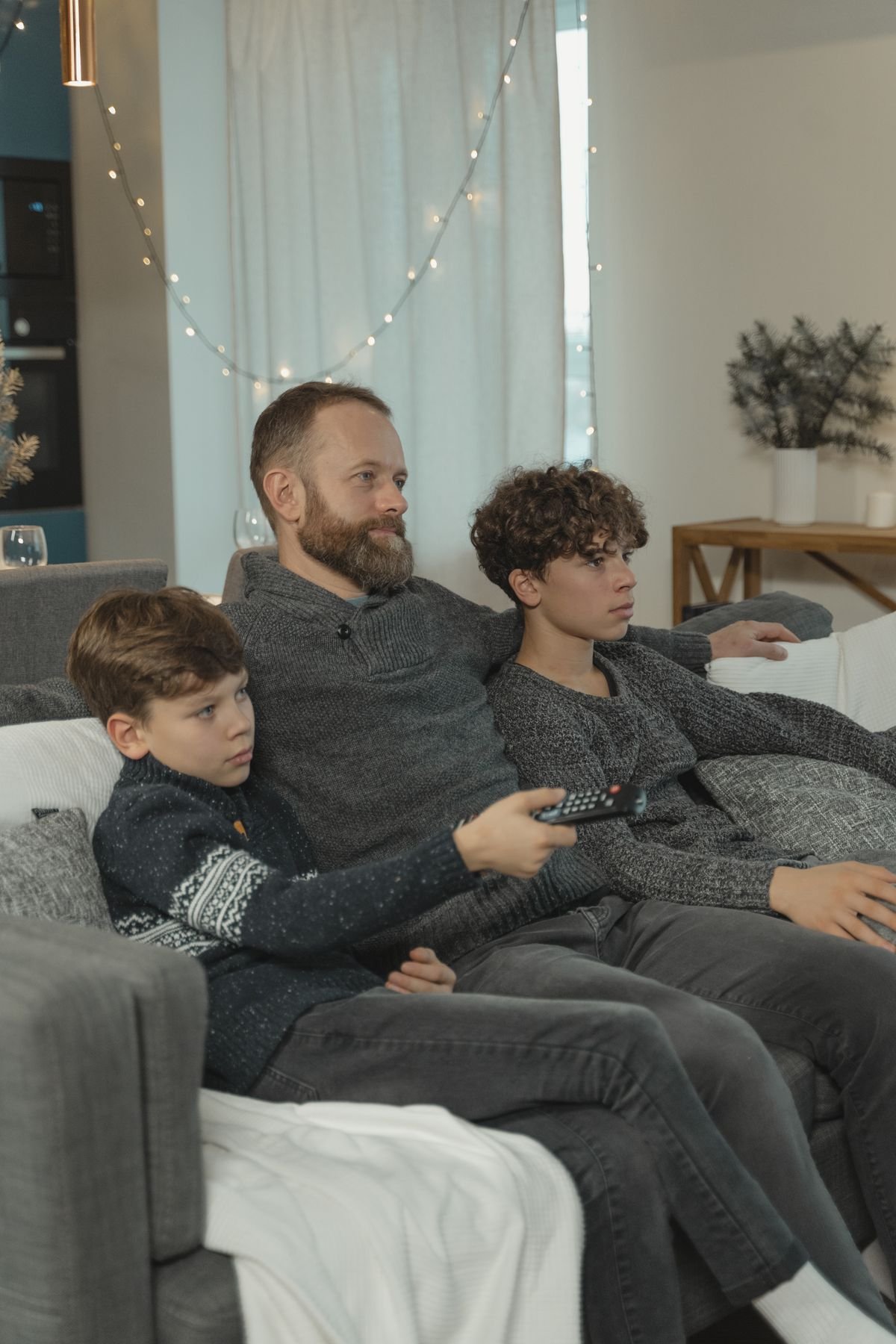
Start with the basics of Crunchyroll account sharing. A Crunchyroll account is a single subscription, paid for by one account holder, with one email address and one password. Sharing that account simply means other people use it — usually through their own profile on the account — rather than paying for separate subscriptions of their own. Done inside one home, this is normal family use: partners, siblings, parents and children watching on the TVs, phones and tablets under the same roof.
The context matters more in 2026 than it used to. Crunchyroll discontinued its free, ad-supported tier on December 31, 2025, so there is no longer a free fallback for the person who loses access to a shared account, and no free tier for a casual viewer to drift back to. Every regular viewer now needs to be covered by a paid plan — their own, or a profile on a household plan. That change alone makes it worth understanding exactly what a paid account covers, because “just use the free version” is no longer an option for anyone.
It also helps to separate three ideas that search results blur together. Sharing within a household is the intended use of multi-profile, multi-stream plans. Sharing a password across households is the grey area this article will be honest about. And buying access from a stranger who resells accounts is something else entirely — a market outside Crunchyroll’s terms altogether, covered later.
Profiles, streams and devices: three different limits
Almost every confused question about Crunchyroll account sharing comes down to mixing up three numbers. They sound interchangeable, but each one controls something different.
Profiles are identities on the account — up to 5 per account. Each profile keeps its own watchlist, viewing history, recommendations and preferences, so one person’s half-finished mecha marathon does not pollute another person’s romance queue. A profile is a personal space, not a licence to watch. Having five profiles does not mean five people can press play at the same moment.
Simultaneous streams are how many people can actually watch at the same time on that account, and this number is set by your tier: 1 on Fan, 4 on Mega Fan and 6 on Ultimate Fan. This is the limit a busy household feels. If everyone with a profile tries to watch different shows on a Friday night, the stream limit — not the profile limit — decides who gets an error message.
Devices are simply the phones, tablets, TVs, consoles and computers signed in to the account. Being signed in on many devices does not multiply your streams. A household can have the app installed all over the house and still be capped at one playing video on a Fan plan. Think of it this way: devices are where the account can be used, profiles are who is using it, and streams are how many can use it at once.
One more distinction: a stream limit applies at a moment in time. Four streams means four simultaneous playbacks — not four episodes or four hours. Sequential watching is effectively unlimited on any tier.
Profiles and streams by tier, compared
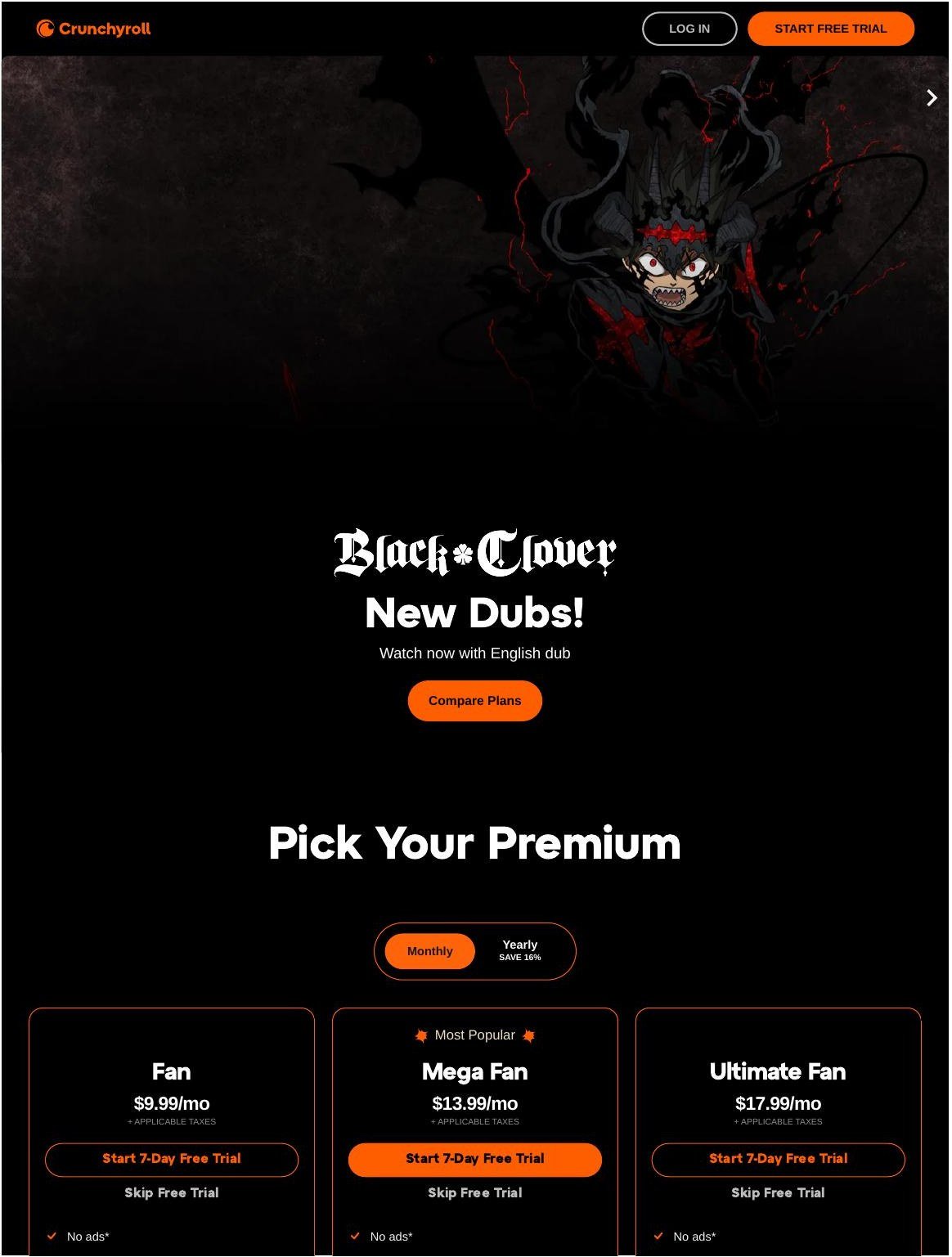
All three paid tiers give you the same profile allowance — up to 5 profiles. What changes as you move up is the number of simultaneous streams, along with the wider package of perks that comes with each level. Our full breakdown in Crunchyroll Plans Explained covers what else each tier includes; the table below isolates the sharing numbers.
| Tier | Profiles | Simultaneous streams | Best for |
|---|---|---|---|
| Fan | Up to 5 | 1 | A solo viewer, or a household that rarely watches at the same time |
| Mega Fan | Up to 5 | 4 | Couples and families where two to four people watch different shows at once |
| Ultimate Fan | Up to 5 | 6 | Large anime-loving households and shared homes with heavy peak-time use |
Read the table carefully and one point stands out: upgrading does not buy you more profiles. A five-person household fits inside the profile limit on every tier. What a bigger household is really buying with Mega Fan or Ultimate Fan is breathing room at peak time — the difference between taking turns and everyone watching what they want, when they want.
The opposite mistake is just as common. A solo viewer who upgrades “for the sharing” gains nothing, because a stream limit of four or six is wasted on one person. If nobody else lives with you, those extra streams are simply capacity you do not need — and choosing the tier that matches your real household is the first honest saving available.
Read next: Crunchyroll Plans Explained
What Crunchyroll’s terms actually allow
Crunchyroll’s terms of use frame the service as something you sign up for and use personally, under an account you are responsible for. That responsibility is the key idea. The account holder owns the login, is accountable for activity on the account, and should treat the password as something to guard rather than distribute. Nothing in the way the service is sold presents an account as a product to be divided up, resold or passed around between separate homes.
At the same time, the product design tells its own story. A service that offers five profiles and up to six simultaneous streams is plainly built for more than one person. Profiles exist so different viewers can keep separate lists and histories, and high stream limits only make sense when several people watch at once. The natural reading — and the way the plans are marketed — is that the “several people” are the members of one household sharing the subscription they live with.
So the honest summary of Crunchyroll account sharing is this: sharing within your household sits comfortably inside what the plans are for. Sharing beyond your household is where you leave the intended use behind. That does not automatically mean Crunchyroll will detect it or act on it tomorrow, and this guide will not pretend otherwise. But “rarely enforced” and “allowed” are different claims, and a rules explainer should not blur them. If your arrangement would fall apart the moment the terms were applied exactly as written, it is not a legitimate arrangement — it is a tolerated one, and tolerated arrangements can change without warning.
There is also a practical point: the account holder is responsible for the account, so giving your password outside your home gives others more than anime — they can change settings, see account details and potentially lock you out. Household sharing keeps that risk inside a circle of people you live with.
Sharing inside your household vs outside it
The household line in Crunchyroll account sharing is easier to apply than people expect. Ask one question: do the people using this account live together as one home? A couple in a flat, a family in a house, siblings sharing a student house — yes. A friend across town, a cousin in another city, an online acquaintance in another country — no, however close the relationship is. It is the shared home, not the closeness of the bond, that defines the arrangement the plans are built around.
Inside the household, sharing is straightforward and genuinely good value. Everyone gets their own profile, the stream limit covers normal peak-time clashes, and one subscription replaces several. It is also stable: nobody’s access depends on a password travelling between addresses, and the account holder can manage profiles, preferences and controls centrally.
Outside the household, the problems are practical as well as contractual. Stream clashes get worse, not better, because you cannot coordinate viewing habits with people in another home as easily as you can shout across a hallway. Passwords get passed on again — a friend shares with their partner, and suddenly strangers are using an account you pay for. If Crunchyroll tightens enforcement in future, out-of-household viewers are the obvious first place it would land, and they would lose access mid-series with no account of their own to fall back on.
Grown-up children who have moved out, and partners who live apart, are the cases people ask about most. Sympathetic as those cases are, the honest answer does not change: once someone lives at a different address, they are a separate household in streaming terms, and the clean solution is their own subscription — or watching together when they visit yours.
How Crunchyroll compares with Netflix’s crackdown
Netflix is the comparison everyone reaches for, because Netflix turned password sharing into headline news. Netflix moved to define an account by household, check that devices belong to that household, and charge for additional members from outside it. Whatever viewers thought of the policy, it was formal, public and actively enforced — and it changed what subscribers everywhere now expect from streaming services.
Crunchyroll’s position, historically, has been much more relaxed. It has not rolled out a comparable, widely publicised household-verification system or an extra-member fee structure of the Netflix kind, and anime fans sharing within their homes have simply got on with it. Crunchyroll’s limits have remained the product limits described in this guide — profiles and simultaneous streams — rather than location-based household policing.
Two cautions belong with that comparison. First, relaxed enforcement is a description of the past, not a promise about the future; the wider industry has clearly moved toward tighter household rules, and any service can revise its approach. Second, Crunchyroll being more relaxed than Netflix does not rewrite Crunchyroll’s own terms. The sensible conclusion is not “anything goes” — it is “share within your household, where you are on solid ground whatever happens, and do not build your viewing life on an arrangement that depends on nobody ever checking.”
The sharing maths: splitting a tier the legitimate way
Here is where legitimate Crunchyroll account sharing quietly beats every grey-market scheme: the arithmetic of a household splitting one proper subscription. Tier prices differ, and they vary by region, so check the current pricing for your country before doing your own sums — but the shape of the maths is the same everywhere, and it needs no invented prices to make the point.
Take a four-person household on Mega Fan. Four simultaneous streams means nobody waits, five profiles means everybody fits, and if the four adults split the bill evenly, each person pays a quarter of one subscription instead of the whole price of their own Fan plan. The household gets more capacity than four separate entry plans would give it at peak time — remember, four separate Fan accounts still only allow one stream each, and cannot help each other out — for a single shared payment.
Scale it up and Ultimate Fan follows the same logic for a big household: six streams split five or six ways turns the top tier into a modest per-person contribution. Scale it down and the logic reverses — two people who never watch simultaneously gain little from a higher tier. The maths only “works” when the people splitting are real viewers in the same home, using real streams.
That last condition is exactly why importing friends from other addresses to make the numbers prettier is a false economy. The moment the split depends on people outside the household, the saving rests on the grey area covered above — and on collecting money from people whose access you cannot guarantee. A household split needs no such apology: it is the product working as designed.
Profiles for families and younger viewers
For families using Crunchyroll account sharing, profiles are more than a convenience — they are the control layer of the account. Giving each family member their own profile keeps children’s viewing history and recommendations separate from adults’, and profile-level content settings let parents shape what younger viewers can browse and watch. Anime spans everything from gentle children’s series to unmistakably adult titles, so on a shared family account those settings are not optional decoration.
Set the account up deliberately rather than letting it grow by accident. Create a profile per person from the start, apply the appropriate content restrictions to younger viewers’ profiles, and protect adult profiles so settings cannot be casually changed. Our step-by-step guide to Crunchyroll parental controls walks through restrictions, teen profiles and profile PINs in detail, and it pairs naturally with the sharing setup in this article: the same five profiles that make sharing pleasant are the ones that make it safe.
A final family tip: agree peak-time etiquette before it becomes an argument. On a one-stream Fan plan, taking turns matters; on Mega Fan or Ultimate Fan, it rarely will.
Why grey-market account sellers are not the answer
Search for Crunchyroll account sharing and you will quickly find sites and tools offering cheap “slots” on shared accounts, shared logins brokered between strangers, or discounted access of unclear origin. This guide does not recommend any of them, and the reasons are practical before they are moral.
When you buy a slot from a stranger, you own nothing. The real account holder can change the password, the seller can disappear, the account can be closed for exactly the kind of use the seller organised — and your watchlist, history and half-finished series go with it. Payment details handed to unaccountable sellers carry their own risks, and if the access was resold in breach of the terms, you have no customer-service route to complain to. Crunchyroll support helps account holders, not slot buyers.
Compare that with the household maths above. A legitimate tier, split between the people who actually live with you, already brings the per-person cost down to the level these sellers advertise — without the instability, the strangers, or the risk of losing everything overnight. The grey market survives by selling to people who have not done that sum, or who want to share across households and are looking for someone to tell them it is fine. It is not fine, and it is usually not even cheaper once a dead account or two is factored in.
How to share an account the right way
Putting it all together, a clean Crunchyroll account sharing setup takes about ten minutes. First, count your household honestly: how many anime viewers live at your address, and how many of them realistically watch at the same time on a normal evening? That second number points at your tier — one points to Fan, up to four to Mega Fan, and a genuinely busy house to Ultimate Fan.
Second, create one profile per person, up to the five-profile limit, and set each one up properly: preferences, subtitle choices, and content restrictions where the viewer is younger. Third, keep the password inside the house. People in your home will sign in on shared and personal devices as needed; the login does not need to travel further than that. Fourth, if you split the cost, split it transparently among the household members who use it — one person pays Crunchyroll, the others settle up at home.
Finally, review it once in a while. Households change: a sibling moves out, a partner develops a seasonal-anime habit that doubles peak-time demand. Adjust profiles and tiers as the household changes, rather than letting yesterday’s arrangement drift into cross-household sharing by default. Choosing between services? Our roundup of the best legal anime streaming apps shows what else belongs on the shortlist.
Compare: Best Legal Anime Streaming Apps
Frequently asked questions
How many profiles can a Crunchyroll account have?
For Crunchyroll account sharing: up to 5 profiles per account, on every paid tier. Each profile keeps its own watchlist, history, recommendations and preferences. Remember that profiles are not the same as streams: five profiles do not mean five people can watch simultaneously.
How many people can watch Crunchyroll at the same time?
Crunchyroll account sharing stream limits depend on the tier: Fan allows 1 simultaneous stream, Mega Fan allows 4, and Ultimate Fan allows 6. When the limit is reached, the next person has to wait until someone else stops watching — upgrading the tier is the legitimate way to raise the cap.
Is it allowed to share a Crunchyroll account?
Crunchyroll account sharing with people in your own household is the use the multi-profile, multi-stream plans are designed for. Handing your password to people who live at other addresses goes beyond the intended use described in the terms, even though Crunchyroll’s enforcement has historically been more relaxed than some rivals’.
Can I share Crunchyroll with a friend who lives somewhere else?
That is cross-household password sharing, and it is not what the plans are built or sold for. Your friend’s clean options are their own subscription, or watching on your account when they are at your home. Arrangements that depend on nobody enforcing the household idea can end without warning.
Does Crunchyroll crack down on password sharing like Netflix?
Historically, no — Crunchyroll has been much more relaxed and has not introduced a comparable, widely publicised household-verification and extra-member system. That describes the past rather than guaranteeing the future, which is why sharing within your household remains the safe position.
Is it worth splitting a higher tier between household members?
Usually, yes — Crunchyroll account sharing is where the maths works best. Several viewers in one home splitting Mega Fan or Ultimate Fan each pay a fraction of one subscription while gaining enough simultaneous streams for everyone. Check current pricing for your region, as tier prices differ by country.
Are cheap shared Crunchyroll accounts from third-party sellers safe?
They are not recommended. You own nothing, the account can be closed or the password changed at any time, your lists and history disappear with it, and there is no support route for slot buyers. A household subscription split between the people you live with is stable, legitimate and comparably cheap.
Conclusion
Crunchyroll account sharing is simple once the three limits are kept separate: up to 5 profiles for the people in your home, and 1, 4 or 6 simultaneous streams depending on whether you choose Fan, Mega Fan or Ultimate Fan. Share those profiles and streams inside your household and you are using the service exactly as it is designed — and splitting a higher tier between the fans under your roof is the cheapest legitimate way to watch. Share your password beyond your household, or buy access from grey-market sellers, and you are building on ground the terms do not cover. Pick the tier that fits your real household, set the profiles up properly, and enjoy the anime.


One Comment