
Best Legal Anime Streaming Apps in 2026 (Free & Paid Options Compared)
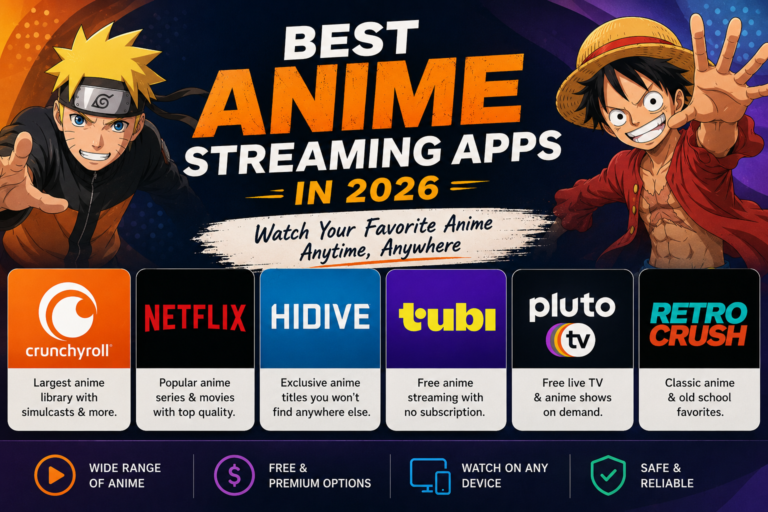
Looking for the best legal anime streaming apps in 2026? This guide compares every major legal anime streaming app — Crunchyroll, Netflix, HIDIVE, Hulu, Disney+ and the free ad-supported options — on catalogue, simulcasts, dubs, offline viewing and price model, and ends with a simple decision checklist. The short answer: Crunchyroll is the best all-round choice for most fans, Netflix is the strongest add-on for binge-watchers, and the free ad-supported options are good enough if you only watch occasionally.
Quick verdict: Start with Crunchyroll — it has the largest dedicated anime library, the fastest simulcasts (though a free trial is sometimes offered to new users). Add Netflix if you already subscribe or prefer complete-season drops, and use HIDIVE only when a specific niche title is exclusive to it. If you watch less than a few hours a month, the free ad-supported options may cover you completely.
Table of Contents
- What Makes an Anime Streaming App “Good”?
- Crunchyroll — The Biggest Dedicated Anime Library
- Netflix — Fewer Titles, Bigger Productions
- HIDIVE — The Hidden Gem for Niche Titles
- Hulu and Disney+ — Anime as Part of a Bigger Bundle
- Free and Ad-Supported Options
- Also Worth Knowing: Regional and Niche Services
- Best Legal Anime Streaming Apps: Full Comparison Table
- Common Mistakes When Choosing an Anime App
- Decision Checklist: Which App Should You Choose?
- Frequently Asked Questions
What Makes an Anime Streaming App “Good”?
Before comparing names, it helps to know what separates a great service from a mediocre one. Six things matter most:
- Catalogue depth — how many series and films are available, and how complete they are (missing seasons are a common frustration).
- Simulcast speed — how quickly new episodes appear after the Japanese air date.
- Subtitles and dubs — subtitle quality and coverage, and whether popular shows get English dubs.
- Apps and devices — a service is only useful if it runs well on the devices you own.
- Offline viewing — whether you can download episodes for commutes, flights and data-free watching.
- Price and free tier — what you get without paying, and whether the paid plan is worth it for your habits.
Most viewers only really care about two or three of these. Keep your own priorities in mind as you read the comparisons below — the “best” app is the one that matches how you actually watch.
Crunchyroll — The Biggest Dedicated Anime Library
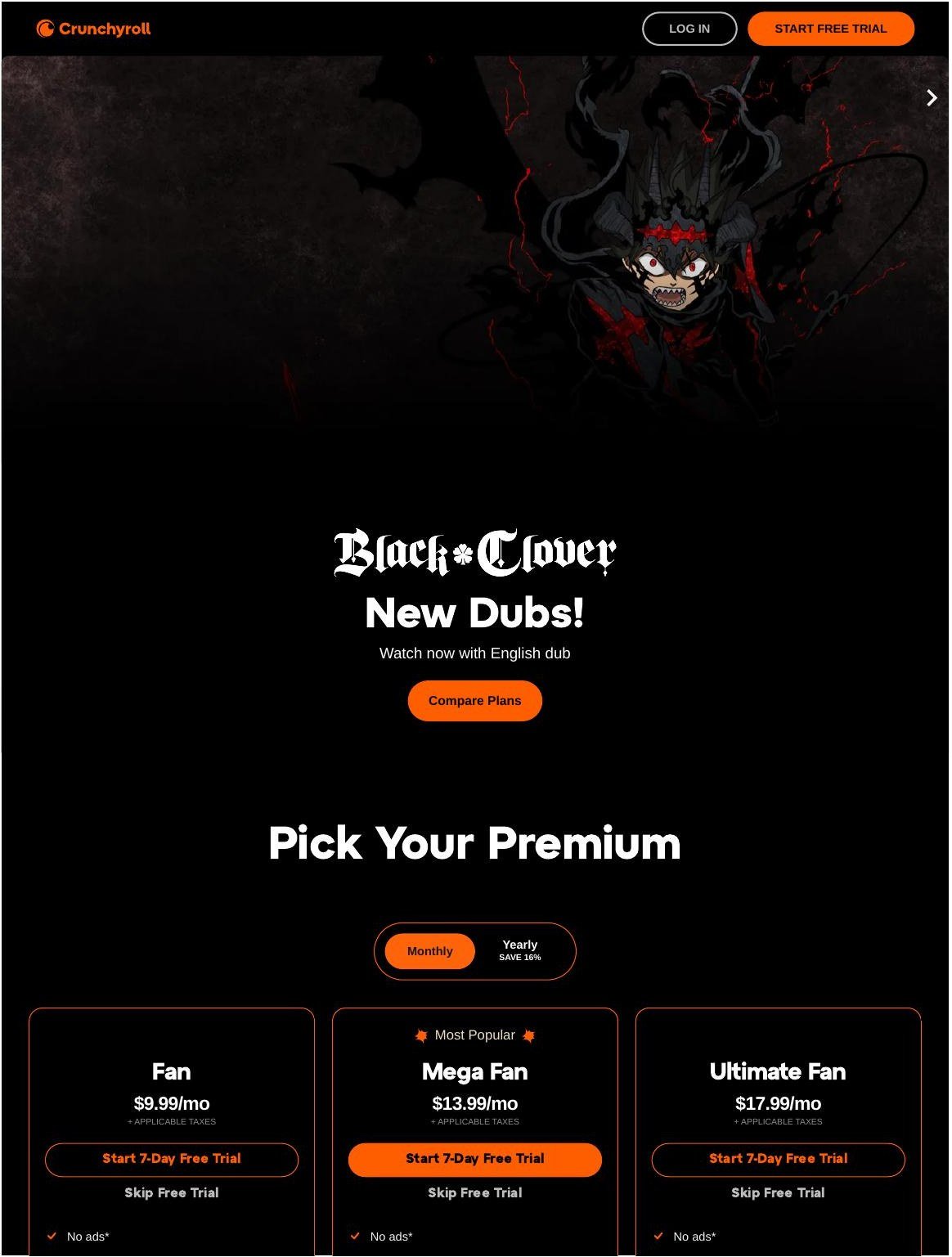
Crunchyroll is the default recommendation for most anime fans, and for good reason: it is a dedicated anime platform rather than a general streaming service with an anime section. Its catalogue covers the major simulcast titles each season alongside a deep back catalogue of classics, and new episodes typically appear about an hour after they air in Japan.
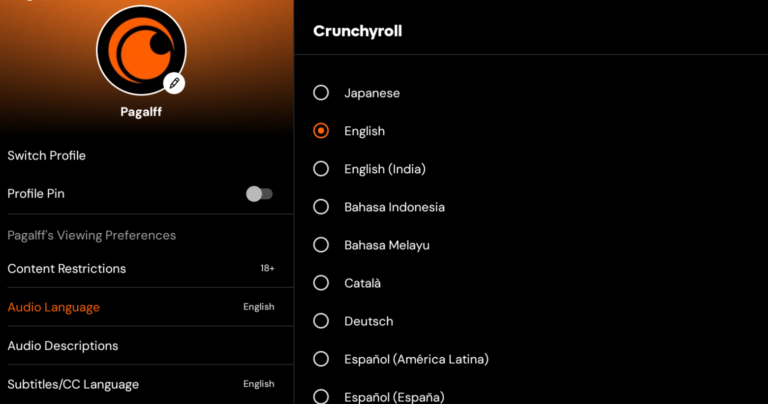
The app is available on virtually every platform — Android, iOS, smart TVs, PlayStation, Xbox and web browsers. Subtitles are available in multiple languages, and many headline series receive English dubs a few weeks behind the subtitled release.
Crunchyroll ended its free ad-supported tier on December 31, 2025; watching now requires a paid plan (a free trial is sometimes offered to new users). If you watch anime weekly, the paid plan is where the value is. We break down the tiers in detail in our guide to Crunchyroll plans.
Pros
- Largest legal anime catalogue, including long-running series with hundreds of episodes.
- Fastest simulcasts — typically around an hour after the Japanese broadcast.
- Apps on almost every device, with multi-language subtitles.
- Occasional free trials let new users test the service before paying anything.
Cons
- No free tier anymore — the ad-supported tier ended in December 2025, so a subscription is required to watch anything.
- Release-day traffic can occasionally cause buffering during huge premieres.
Best for: fans who follow new seasonal anime and want the widest selection in one place.
Netflix — Fewer Titles, Bigger Productions
Netflix approaches anime differently. Instead of chasing every simulcast, it licenses a curated selection, funds original productions, and releases many series in complete batches. That batch model suits binge-watchers: no waiting a week between episodes.
The trade-off is timing and breadth. Netflix’s anime library is smaller than Crunchyroll’s, and simulcast-style weekly releases are less common, though the platform has experimented with them for major titles. On the plus side, video quality is excellent — 4K is widely available where the source material supports it — dubs are produced in many languages, and if you already pay for Netflix for other content, the anime comes at no extra cost.
If you are deciding between the two, our head-to-head comparison in Crunchyroll vs Netflix for anime walks through catalogue, price and release style in detail.
Pros
- High-production originals and acclaimed films you cannot find elsewhere.
- Complete seasons drop at once — ideal for binge-watching without spoilers building up.
- Excellent apps, recommendation engine and multi-language dubs.
- Downloads included on standard plans.
Cons
- No free tier — you pay from day one.
- Much smaller anime catalogue, and releases often arrive months after Japan.
Best for: casual viewers and binge-watchers who already have a Netflix subscription.
HIDIVE — The Hidden Gem for Niche Titles
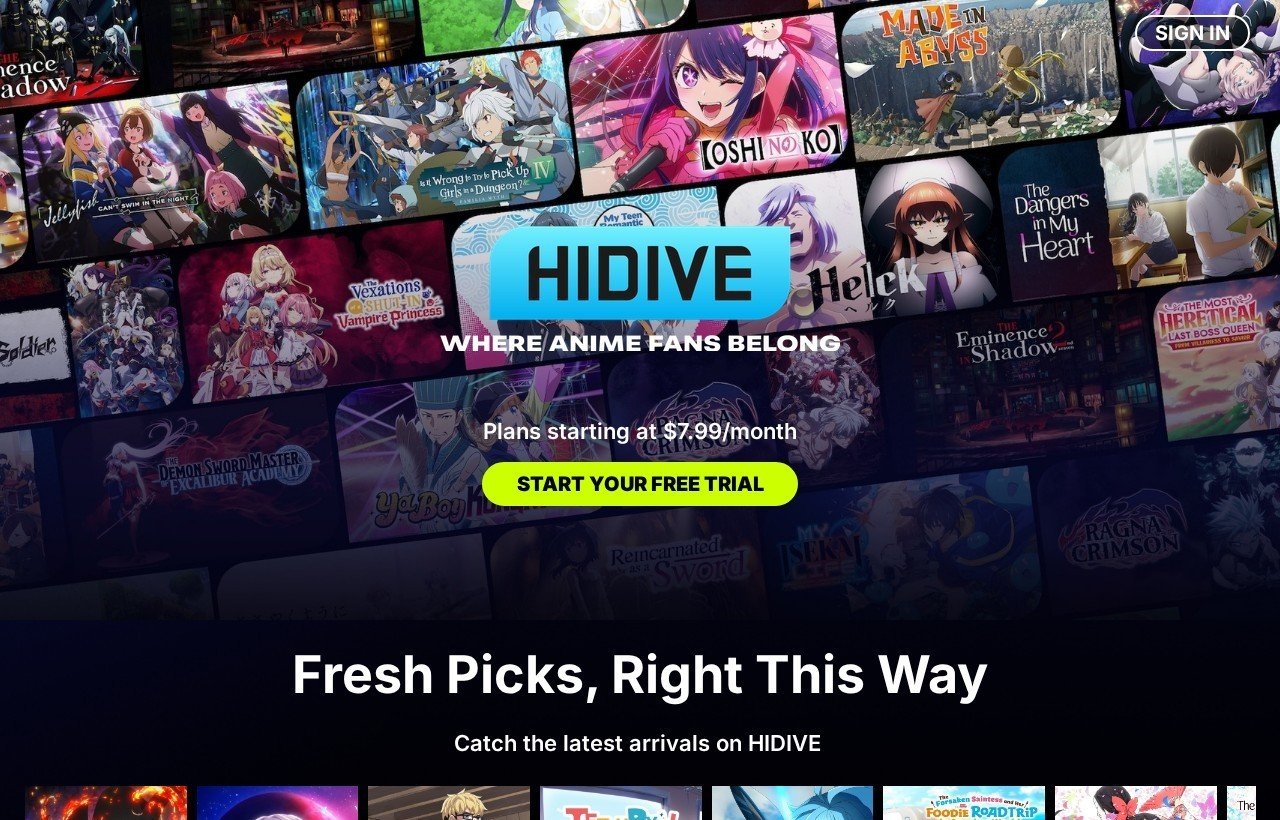
HIDIVE is smaller than Crunchyroll but earns its place by picking up titles the bigger platforms skip — including less-edited versions of some series, older catalogue shows and niche genres. Its simulcast lineup each season is modest, yet it frequently includes exclusives you cannot legally stream anywhere else.
The app experience is more basic than Crunchyroll’s, and the catalogue is thinner overall, so HIDIVE works best as a companion service rather than your only subscription. Pricing is typically competitive, and for fans of specific genres it can be the difference between watching a show legally and not watching it at all.
Pros
- Exclusive and niche titles unavailable on bigger platforms.
- Solid pick-up of older and overlooked catalogue series.
- Downloads supported on its mobile apps for subscribers.
Cons
- Smaller overall catalogue and a more basic app experience.
- Fewer simulcasts per season than Crunchyroll.
Best for: dedicated fans hunting for specific or niche series.

Hulu and Disney+ — Anime as Part of a Bigger Bundle
In the United States, Hulu carries a respectable anime selection, including simulcasts of several popular series, as part of its general entertainment catalogue. Disney+ has also expanded into anime in many regions, licensing notable titles and co-productions.
Neither is an anime-first platform, so discovery tools and catalogue completeness lag behind the specialists. But if you already subscribe for other shows and films, both are worth checking before paying for another service — you may find the series you want is already included.
Pros
- Anime included in a subscription you may already pay for.
- Strong general entertainment catalogues alongside the anime.
Cons
- Anime is a side section, not the focus — catalogues are incomplete and vary sharply by region.
- Hulu is region-limited compared with the global services.
Best for: existing subscribers who watch anime occasionally.
Free and Ad-Supported Options
You do not have to pay to watch anime legally. Several services offer free, ad-supported viewing (Crunchyroll is no longer one of them — its free tier ended on December 31, 2025):
- Library apps such as Hoopla and Kanopy — free streaming of anime films and series with a library card, in supported regions.
- Tubi — a free ad-supported platform with a surprisingly solid anime section in supported regions, including classic series and films.
- YouTube (official channels) — some studios and licensors publish full episodes or entire series on official channels, sometimes for a limited time.
- Pluto TV and similar FAST services — linear anime channels that stream episodes around the clock in some countries.
Availability varies a lot by country, since anime licensing is regional. A service that is packed in one country may be nearly empty in another, so always check the catalogue for your region before committing.
Pros
- Completely free and fully legal — no account tricks or workarounds.
- Great for classics, sampling new genres and casual viewing.
Cons
- Ads interrupt episodes, catalogues rotate without much warning, and downloads are generally not offered.
- New simulcast episodes are rarely available free at release.
Best for: casual viewers, students on a budget, and anyone testing whether anime is for them.
Also Worth Knowing: Regional and Niche Services
The five options above cover most viewers, but the legal market is wider — especially outside the US:
- Prime Video add-on channels — in several regions, anime channels (including anime-focused subscriptions) are sold as add-ons inside the Prime Video app, which can be convenient if you want one bill and one app.
- RetroCrush and similar classics specialists — services dedicated to older anime, often free with ads, and a genuine treasure trove for pre-2000s series that modern platforms ignore.
- Bilibili and regional platforms in Asia — in Southeast Asia especially, regional platforms carry simulcasts with local-language subtitles that the global services do not offer.
- Studio and licensor YouTube channels — beyond full episodes, official channels host specials, first-episode previews and time-limited full-series drops that never appear on subscription services.
The pattern is the same everywhere: licensing is regional, so the “best app” answer genuinely changes by country. The five main services above are the safe defaults; these regional options are worth a search when a specific series is missing everywhere else.
Best Legal Anime Streaming Apps: Full Comparison Table
| Service | Free tier | Ads on free tier | Offline downloads | Simulcasts | Catalogue focus | Dubs |
|---|---|---|---|---|---|---|
| Crunchyroll | No — ended Dec 2025 | n/a | Premium tiers | Extensive, ~1h after Japan | Dedicated anime, largest library | Many headline series |
| Netflix | No | n/a | Yes, standard plans | Limited; mostly batch drops | Curated anime + big originals | Broad, multi-language |
| HIDIVE | Trial only (in most regions) | n/a | Yes, subscribers | Moderate | Niche and exclusive titles | Selected titles |
| Hulu / Disney+ | No | Depends on plan | Yes, on supported plans | Some | Anime within a general catalogue | Selected titles |
| Tubi | Yes (fully free) | Yes | No | No | Classics and films | Mostly older dubs |
A note on prices: exact monthly prices differ by country and change over time, so check each service’s pricing page for your region rather than trusting any fixed figure in a guide. What stays stable is the model — Crunchyroll and HIDIVE are anime-specific subscriptions, Netflix, Hulu and Disney+ are general subscriptions where anime is one section, and Tubi-style services are free with ads.
Common Mistakes When Choosing an Anime App
- Subscribing before checking your region’s catalogue. Licensing is regional; the show that convinced you to subscribe may not be available in your country. Search for your must-watch titles inside the app first.
- Paying for two services with overlapping catalogues. Many series appear on multiple platforms. Check where your watchlist already lives before adding a second subscription.
- Ignoring the free options. Free ad-supported services and trial weeks tell you more about app quality, subtitle style and device support than any review. Test before you pay.
- Judging a service by its homepage. Recommendation rows hide catalogue depth. Use the search and season/browse pages to judge what is really there.
- Forgetting about downloads. If you commute or travel, offline support may matter more than a slightly bigger catalogue. Check the plan actually includes downloads.
Decision Checklist: Which App Should You Choose?
Work through these questions in order:
- Do you follow currently-airing anime weekly? Yes → Crunchyroll Premium is built for you. No → keep reading.
- Do you already pay for Netflix, Hulu or Disney+? Yes → search their anime sections for your watchlist first; you may need nothing else.
- Is there a specific niche or older series you cannot find anywhere? Yes → check HIDIVE before anything else.
- Is your budget zero right now? Tubi, Pluto TV-style channels and official YouTube channels give you a genuinely large amount of legal anime — Crunchyroll no longer has a free tier.
- Do you watch mostly on the go? Prioritise services whose plans include downloads, and test the mobile app on your own phone during a free period.
For most people the answer lands on Crunchyroll first, because it has the deepest catalogue and the fastest simulcasts (and a free trial is sometimes offered to new users). Whichever you pick, watching through legal apps supports the studios and translators who make the subtitled releases possible, and it guarantees complete, correctly ordered episodes in the best available quality — a better experience than hunting through unofficial sources, and one that keeps the industry producing your favourite shows.
One last tip: plans, free tiers and regional catalogues change from season to season, so re-run this comparison once or twice a year. The best anime streaming app for you in 2026 may not be the same one that was best in 2024. If buffering or app problems ever get in the way, see our fixes for Crunchyroll buffering before you blame the service itself.
Frequently Asked Questions
What is the best free legal anime streaming app?
Tubi is usually the strongest starting point — it is completely free with ads in supported regions, especially for classic series and anime films. Pluto TV-style channels and official studio channels on YouTube also post full episodes from time to time. Crunchyroll no longer offers a free tier — it ended on December 31, 2025 — so watching Crunchyroll now requires a subscription.
Is Crunchyroll better than Netflix for anime?
For anime specifically, yes — Crunchyroll has a far larger catalogue and weekly simulcasts close to the Japanese broadcast. Netflix is better if you want high-budget originals, complete-season drops and dubs in many languages, or if you already pay for it for other content.
Can I watch anime legally without any subscription?
Yes. Free ad-supported services — Tubi, Pluto TV-style channels and official YouTube channels — offer a large amount of anime legally at no cost. The trade-offs are ads, rotating catalogues and no access to the newest episodes at release. (Crunchyroll used to be on this list, but its free tier ended on December 31, 2025.)
Which anime app has the most dubbed shows?
Netflix produces dubs in many languages for its originals and major licenses, while Crunchyroll dubs many headline simulcasts a few weeks behind the subtitled release. For English dubs of seasonal anime specifically, Crunchyroll’s growing dub catalogue is usually the deeper one.
Can I download anime episodes to watch offline?
Yes, on paid plans. Crunchyroll Premium, Netflix and HIDIVE all support downloads in their mobile apps. Free ad-supported tiers generally do not offer downloads, and downloaded episodes expire under each app’s rules, so they are for viewing on trips rather than building a permanent library.
Why is an anime available in one country but not another?
Anime is licensed region by region, so a series may be on Crunchyroll in one country, Netflix in another, and unavailable in a third. This is normal and changes as licences are renegotiated. Always check the catalogue for your own region before subscribing.
Is it worth paying for two anime services at once?
Only if your watchlist genuinely spans both — for example, Crunchyroll for weekly simulcasts plus Netflix for its originals. Many viewers rotate instead: subscribe to one service, finish what you want there, cancel, and switch. There is usually no contract preventing that.



9 Comments