CrunchyMODAPK

HUB OF ANIME
Why Crunchyroll Anime Episodes Get Delayed (2026)
Why Crunchyroll Anime Episodes Get Delayed (2026)? You’ve cleared your Saturday night. Snacks are ready, the lights are dim, and you open the Crunchyroll premium apk expecting that new episode notification — and it’s not there. No new drop, no explanation, just the same episode count sitting where it was last week. If Crunchyroll download free anime episodes delayed has been your exact search query recently, you’re not imagining things, and you’re definitely not alone.
Anime delays have become a near-constant topic of conversation in fan communities heading through 2026, and for good reason. Between anime production delays on major studios, a genuinely brutal winter storm that knocked out one of Crunchyroll’s key dubbing facilities, and a handful of high-profile shows pushing back their anime release schedule mid-season, there’s a lot happening that most casual viewers never see. This isn’t a premium crunchyroll apk delay-specific problem, either — it’s an anime industry-wide pressure point that happens to become visible to Western audiences through the Crunchyroll premium gratis streaming platform most of us rely on.
This piece is meant to pull back the curtain a bit. We’ll walk through why an anime episode delayed notice actually happens, how the Crunchyroll premium apk gratis simulcast system works under the hood, and what you can realistically do while you wait. We’ll also look at a few confirmed, publicly reported examples from the current anime season schedule so you can see these mechanics in action rather than just taking our word for it — plus the latest Crunchyroll premium free news on how these delays get communicated.
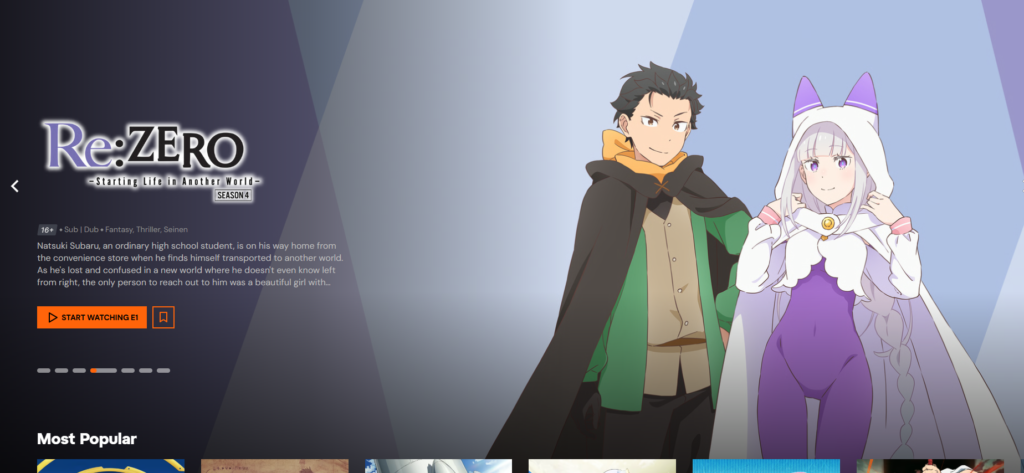
Why Anime Episodes Get Delayed
Here’s the thing most viewers don’t realize when they ask why is my anime delayed: a “delayed” episode on Crunchyroll gratis apk premium is almost never a Crunchyroll premium unlocked problem. Crunchyroll cracked accounts is a distributor. It licenses finished (or nearly finished) episodes from Japanese anime studios and streams them, often within an hour of the Japanese broadcast, as part of its anime streaming platform model. When an episode doesn’t show up on time, the bottleneck is almost always upstream — somewhere between the animation studio, the broadcaster in Japan, and the localization pipeline that turns a raw episode into something Western audiences can watch with subtitles or an English dub anime track.
That distinction matters because it reframes the entire conversation. Crunchyroll catalogo doesn’t control when Studio MAPPA finishes an episode, and it doesn’t control whether a Tokyo TV network preempts a broadcast for breaking news. What Crunchyroll premium download does control is how quickly it can license, localize, and publish whatever eventually gets delivered — and even that process has its own points of failure, which we’ll get into shortly.
Anime production delays are also, frankly, more common than the industry likes to admit publicly. Japanese TV anime is still largely produced on a broadcast-driven anime broadcast schedule, meaning episodes are frequently finished just days — sometimes hours — before they air. That’s a razor-thin margin with almost no room for error, and it’s a big part of why individual episode delays happen more often than most Western television ever experiences.
How Crunchyroll Simulcasts Actually Work
The word “simulcast” gets thrown around loosely, so it’s worth being precise about what it actually means. A simulcast is a subtitled episode released on Crunchyroll premium mod apk as close as possible to its original Japanese broadcast — often the same day, sometimes within an hour or two. A “simuldub” is the same idea, but for an English dub recorded and released on a similarly tight turnaround, which is a considerably harder logistical feat for any anime streaming platform to pull off consistently.
Here’s the general pipeline, simplified:
1. The studio finishes animating and compositing the episode, often right up against the broadcast deadline in Japan.
2. The episode airs on Japanese television through a regional or national broadcaster.
3. A clean master file is delivered to the production committee’s international licensing team, who pass it to Crunchyroll.
4. Crunchyroll’s premium extension localization team adds subtitles (translation, timing, quality checks) — this is the subbed simulcast most viewers watch first, and it’s central to how the whole Crunchyroll premium apk mod subscription experience is built around fast turnaround.
5. For simuldubs, a separate pipeline runs in parallel or shortly after: script adaptation, voice direction, recording sessions, sound mixing, and final quality control.
6. The finished file is published to Crunchyroll’s download apk platform, subject to regional licensing rules.
Every single one of those steps is a place where a delay can originate, and they don’t operate independently — a hiccup early in the chain cascades through everything downstream. That’s why a relatively small problem, like a late animation deliverable, can turn into a Crunchyroll premium apk 2024 delay announcement that affects both the sub and dub release.
The Most Common Reasons Episodes Are Delayed
Not every delay has the same root cause, and understanding the differences actually helps you predict how long you’ll be waiting.
Production Problems
This is the big one. Anime studio production teams routinely operate under extremely tight, sometimes unsustainable schedules. When a studio falls behind — whether from understaffing, an overly ambitious animation target, or simply misjudging how long a complex sequence will take — the studio and broadcaster will often push the air date back rather than release a rushed, lower-quality episode. It’s not a decision made lightly, since delays cost money and disrupt merchandising and marketing plans, but it’s generally viewed as the lesser evil compared to shipping something unfinished.
Broadcast Interruptions
Japanese television isn’t immune to real-world events. Breaking news coverage, emergency broadcasts, or extended special programming can bump a scheduled anime slot entirely, pushing the episode to the following week regardless of whether the episode itself was ready on time.
Japanese Holidays
Golden Week, New Year’s, and Obon are notorious for disrupting the weekly anime episodes schedule. Many shows go on a planned one-week hiatus during these periods, which isn’t technically a “delay” in the production sense, but it looks identical to viewers checking Crunchyroll pirata and seeing no new episode.
Sports Broadcasts
Live sporting events — baseball tournaments, sumo, or other high-profile broadcasts — frequently take priority over regularly scheduled anime slots on Japanese networks, especially if the event runs long. This is one of the more predictable causes, since major sports calendars are known well in advance, though anime schedules don’t always account for it cleanly.
Natural Disasters
Earthquakes, typhoons, and other events that affect Japan directly can delay production, damage facilities, or disrupt the broadcast infrastructure entirely. This category tends to produce the longest and least predictable delays, since safety and recovery take priority over release schedules by necessity.
Studio Scheduling
Animation studios rarely work on a single project at a time. A studio juggling three or four simultaneous productions can end up reallocating staff from one show to another to hit a more urgent deadline, which quietly slows down the deprioritized title. This is a big part of why some sequels take far longer to arrive than fans expect — the studio simply has other obligations.
Licensing Negotiations
Occasionally the finished episode exists and is ready to go, but the anime licensing rights haven’t been finalized for international distribution yet. This is less common for long-running simulcast partners but does happen, particularly with new licensing deals or shows changing distributors between seasons.
Translation and Subtitle Delays
Even once Crunchyroll premium apk desbloqueado receives the source file, subtitles need to be translated, timed to match dialogue pacing, and quality-checked. A rushed or low-quality translation creates its own backlash, so localization teams generally won’t publish until the subtitles clear internal review — which occasionally pushes a release back by hours or, less often, days.
Dub Production Delays
Simuldubs are considerably more fragile than subbed simulcasts. Recording a dub requires voice actors, a studio, a director, and often a physical space — all of which need to be available and functioning on a tight weekly turnaround. If any part of that chain breaks, the dub slips, even when the subtitled version releases on schedule.
Technical Streaming Issues
Sometimes the episode is genuinely ready, and the holdup is a streaming delays-style platform-side technical problem — an upload failure, a metadata error, or a regional licensing restriction blocking release in certain countries while it goes live elsewhere. These delays are usually the shortest, often resolved within hours.
Delay Type
Production problems
Broadcast interruptions
Japanese holidays
Sports broadcasts
Natural disasters
Studio scheduling
Licensing negotiations
Subtitle delays
Dub production delays
Technical streaming issues
Typical Length
1–4 weeks
Same week
1 week (planned)
Same week
Highly variable
Weeks to months
Days to weeks
Hours to a day
1–3 weeks
Hours
Who's Responsible
Animation studio
Japanese TV network
Broadcast schedule
Japanese TV network
Outside anyone’s control
Animation studio
Distributor/licensor
Localization team
Dub studio
Streaming platform
How Delays Affect Fans
The practical impact is obvious — you don’t get to watch the show you were looking forward to. But the ripple effects go a bit further than that for the wider community of anime fans. Delays fragment discussion online, since some regions or platforms may receive an episode before others, spoiling plot points for viewers still waiting. They also disrupt momentum for shows that are trying to build word-of-mouth during a competitive season, since a delay right after a strong premiere can cost a series some of its early buzz.
There’s also a quieter frustration that comes up constantly in fan communities: the silence. A delay itself is usually understandable — production is hard, and most fans genuinely get that. What tends to generate real frustration is when an episode simply doesn’t appear with no announcement at all, leaving people refreshing a page without knowing whether they missed something, whether the show got cancelled, or whether there’s simply nothing new yet.
How to Check if an Episode Is Really Delayed
Before assuming the worst, it’s worth confirming the delay through a reliable source rather than relying on Discord rumors, which move fast and aren’t always accurate.
- Check Crunchyroll’s official news section or the show’s official anime release date page — delays are typically posted directly on the platform once confirmed.
- Check the anime’s official Japanese website or social media account — Japanese production committees usually post delay notices in Japanese well before English-language coverage catches up.
- Look at Crunchyroll’s premium mod apk own social media accounts, which frequently post delay confirmations for high-profile titles.
- Cross-reference with established anime news outlets that specialize in tracking broadcast schedules, since they often catch official Japanese announcements early.
- Be cautious of fan speculation threads claiming a delay before any official source has confirmed it — sometimes what looks like a delay is actually a regional licensing gap rather than a genuine production issue.
What You Should Do Instead of Waiting
Refreshing the app every twenty minutes isn’t going to make an episode appear faster, so it’s worth having a plan for the wait. A few genuinely useful options
- Catch up on the source material. If the anime is adapting a manga or light novel, reading ahead (spoiler tolerance permitting) can tide you over without depending on animation schedules at all.
- Start something else in the same genre. Delays are a decent excuse to explore adjacent shows you’ve been putting off.
- Follow the studio’s other current projects, since sometimes staff reallocation toward a different show explains the gap.
- Set a single reliable notification source — Crunchyroll’s cracked accounts app notifications or the studio’s official account — instead of monitoring multiple unreliable threads.
Recent Examples of Anime Delays
To ground all of this in something concrete rather than abstract explanation, here are a few publicly confirmed delays from the current Crunchyroll winter 2026 and spring season lineup. These are presented as documented examples, not speculation.
Frieren: Beyond Journey’s End Season 2 saw its English dub episodes delayed during the Winter 2026 season after severe winter storms hit Texas, where a key dubbing facility used for several Crunchyroll pk simuldubs is based. Crunchyroll confirmed the delay publicly and provided updated release dates for the affected dubbed episodes, alongside other titles caught in the same disruption, including Trigun Stampede.
Sentenced to Be a Hero, one of the notable new titles of the Winter 2026 season, had its second episode pushed back by roughly a week shortly after its premiere. At the time reporting emerged, no detailed official explanation had been shared, though the delay was confirmed through Japanese broadcast schedule updates.
Chitose Is in the Ramune Bottle, a Fall 2025 title from Studio feel., saw a multi-week delay for its sixth episode, with the studio publicly citing production circumstances and a desire to protect the quality of the series. The delay pushed the show’s remaining episodes into the following year.
Alya Sometimes Hides Her Feelings in Russian Season 2, produced by Doga Kobo, was pushed from its originally expected 2026 window to 2027, with the studio’s broader production workload across multiple simultaneous titles cited as a contributing factor.
Daemons of the Shadow Realm experienced a dub-specific delay during Spring 2026, with Crunchyroll india confirming a short gap before resuming its weekly English dub schedule, while the Japanese-language release continued on its original timeline.
These examples aren’t cherry-picked for drama — they’re representative of exactly the categories described earlier: weather-driven logistics problems, studio-side production strain, and dub-specific bottlenecks operating independently of the subtitled release.
How Crunchyroll Announces Delays
Crunchyroll premium grátis typically posts delay notices through a combination of channels: the platform’s download crunchyroll premium apk official announcement section, social media accounts tied to the specific show, and occasionally in-app anime news update notifications for major titles. The level of detail varies quite a bit — sometimes you get a specific reason (a winter storm, a studio production issue), and sometimes the announcement is a simple revised date without much further explanation, particularly when the underlying cause originates with the Japanese studio or broadcaster rather than Crunchyroll itself.
It’s worth noting that Crunchyroll premium apk 2024 simulcast delays and dub-only delays are often communicated separately, since they frequently have entirely different causes. A show can be perfectly on schedule for its subtitled release while its English dub slips by a week or two, so it’s worth checking which version you’re actually tracking.
Will Anime Delays Become More Common?
This is genuinely difficult to predict with certainty, and anyone claiming to know for sure is guessing. That said, a few structural trends make delays worth watching closely going forward. Global streaming demand for simultaneous, multi-language anime releases has grown substantially, putting more pressure on already tight production pipelines that were largely built for a single domestic broadcast, not a coordinated worldwide rollout. At the same time, animation studios continue to juggle a high volume of concurrent projects, and industry reporting has repeatedly pointed to staffing and workload pressure as an ongoing structural issue rather than a one-off problem.
Whether that translates into more frequent delays specifically, or simply more visible ones (since global audiences now notice delays that might have gone unremarked in a Japan-only broadcast era), isn’t something that can be stated as fact without more data. What’s fair to say is that the pressure points causing today’s delays — tight schedules, resource-limited dub pipelines, and studios managing multiple simultaneous productions — don’t appear to be resolving themselves anytime soon.

Expert Tips for Following Anime Release Schedules
- Follow the show, not just the platform. Official studio and publisher accounts often post delay news before it reaches secondary coverage.
- Understand the difference between sub and dub delays — they’re rarely caused by the same thing, and checking the wrong one wastes your patience.
- Build in schedule buffer during Japanese holiday periods, since planned hiatuses are common and predictable if you check ahead.
- Don’t treat forum speculation as confirmation. Wait for an official post before assuming a show is in trouble.
- Diversify your watchlist. Having two or three shows in rotation smooths out the frustration when any single one hits a delay.
Frequently Asked Questions
Why is my anime delayed on Crunchyroll?
Most delays originate upstream from Crunchyroll itself — with the Japanese animation studio, the broadcaster, or the dub production pipeline — rather than with the Crunchyroll app directly, though technical streaming issues do occasionally occur on Crunchyroll’s end.
Does a delay mean the anime got cancelled?
No. The overwhelming majority of delays are temporary scheduling shifts, not cancellations. Confirmed cancellations are typically announced explicitly and separately from routine delay notices.
Are dub delays different from subtitle delays?
Yes, and they’re often unrelated. A subtitled episode can release on schedule while the English dub lags behind due to separate recording and production logistics.
Is this a Crunchyroll-specific problem?
Not really. Most root causes trace back to Japanese production and broadcast schedules, which affect every streaming platform carrying the same titles, not just Crunchyroll.
Where can I find official delay announcements?
Crunchyroll’s official news section, the show’s official social media accounts, and established anime news outlets are the most reliable sources, generally more accurate than fan speculation threads.
Do regional licensing rules affect delays?
Yes — availability and timing can vary by region due to licensing agreements, so an episode might be live in one territory before it’s cleared for release in another.
Will streaming demand keep causing more delays?
It’s a reasonable structural concern given current industry pressures, but it isn’t something that can be stated as a certainty. The pressures behind today’s delays appear ongoing rather than temporary.
Conclusion
A missing episode notification isn’t fun, but it’s rarely the mystery it feels like in the moment. Most anime delays trace back to a handful of predictable causes — production strain, broadcast scheduling, weather disrupting a dub studio, or the simple mechanics of translating and localizing content on an unforgiving weekly deadline. None of that makes the wait less annoying, but it does make it a lot less confusing.
The best approach going forward isn’t obsessively refreshing an app — it’s knowing where to check for real confirmation, understanding that sub and dub delays are often separate problems, and giving yourself something else to watch in the meantime. Anime production is a genuinely demanding process running on tight margins, and delays, while frustrating, are usually a sign that a studio chose to protect quality rather than rush something out the door.